

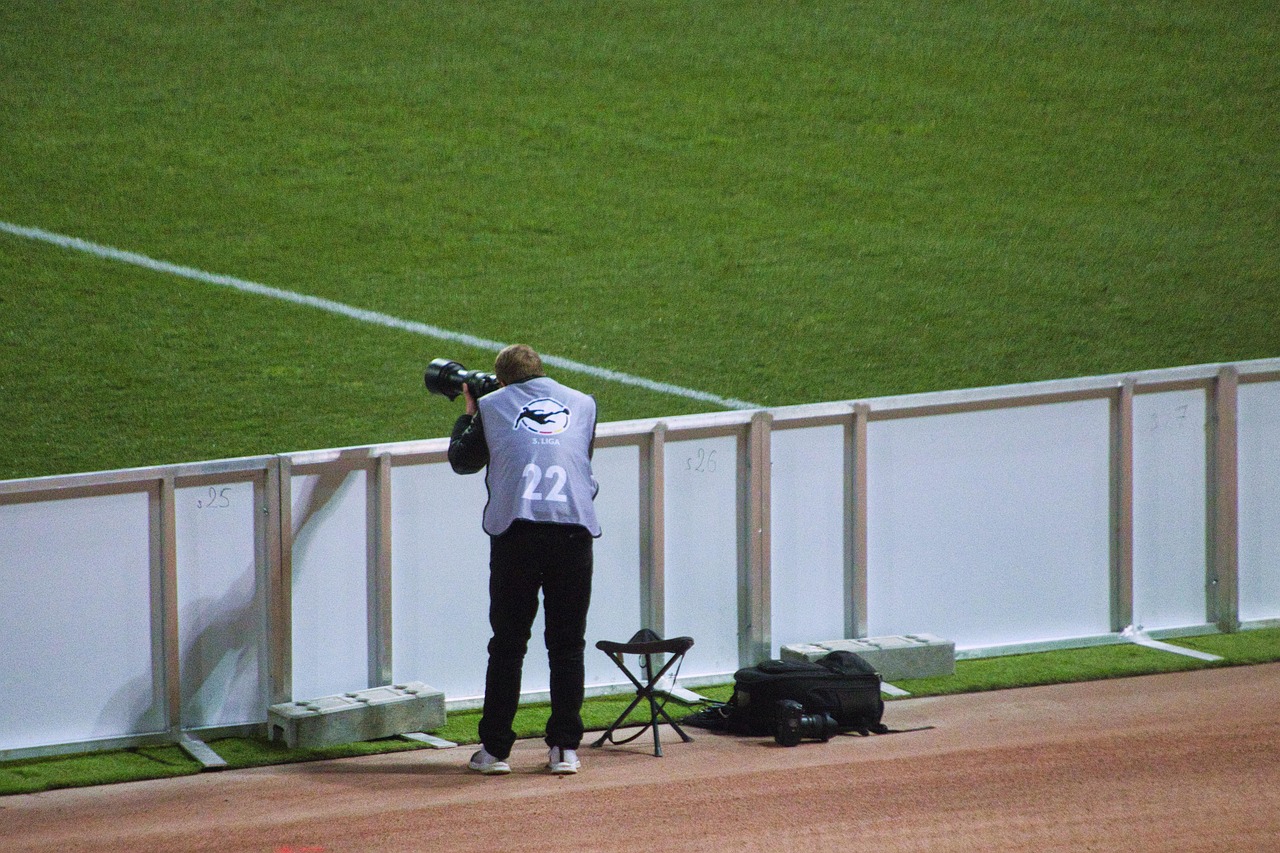
Sport won’t wait for you to adjust your ISO!
A survival guide for the sideline
If you think sports photography is like a portrait shoot where you say: “Hold it there, a bit more to the left, smile a little, chin down”, I have bad news: it isn’t. In sport, if you blink, you’ve missed the play. If you looked at the screen to check your shot, you’ve just missed the goal of the decade — and probably the rest of your career as a “moment” photographer.
After more than 20 years of chasing footballers, athletes and stray balls that wanted to test the toughness of my lenses (and my bones), I’ve learned one sacred thing: the camera is just an extension of your reflexes. It doesn’t take the picture — you hunt it.
Here’s how not to come home with a card full of “almost-got-its” and blurred plays.
Quick Settings
| Shutter | Aperture | ISO | Focus |
| ⚡ 1/1000s+ | 🔘 f/2.8 – 4 | 🕯️ Auto (max 6400) | 🎯 AF-C |
Shutter speed: don’t be lazy — freeze time!
If you shoot at 1/200s and wonder why your player looks like a ghost haunting the pitch, the problem isn’t the camera. It’s the setting. In sport, motion is enemy number one if you don’t know how to control it.
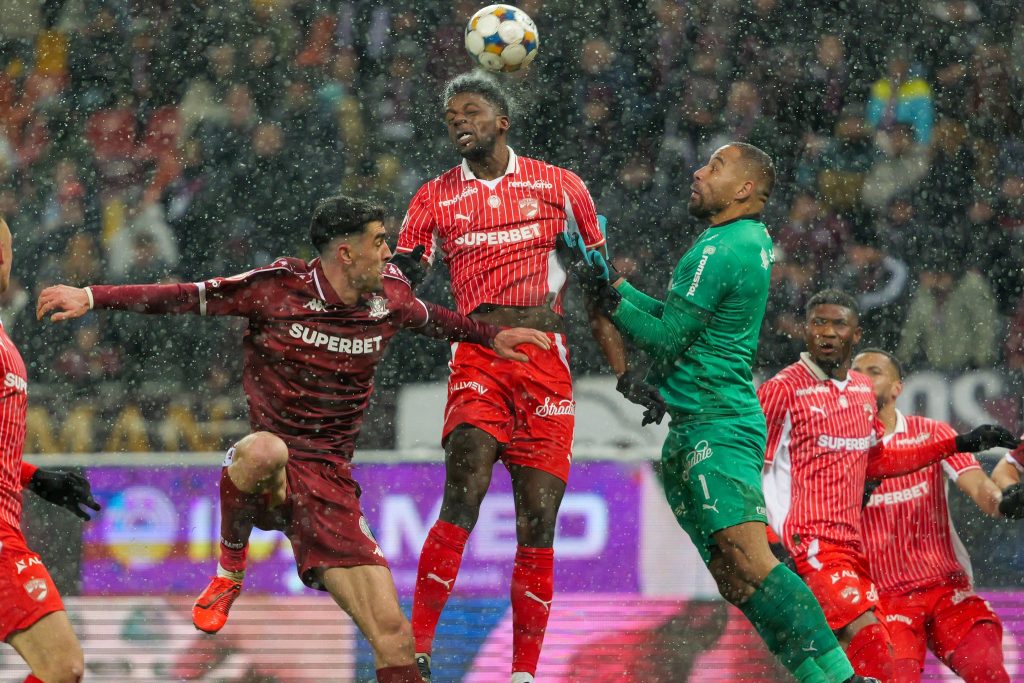
- The golden rule: Start at 1/1000s. That’s the base, the foundation, the “holy trinity” of sharpness.
- Want to see the drops of sweat flying? Go to 1/1600s or even 1/2000s.
- Why? Because a “noisy” frame (high ISO) can still be rescued in editing, but a blurred one is only good for the Recycle Bin. Better a “dirty” shot that’s razor-sharp than a “clean” one that’s soft.
Aperture: separate the wheat from the chaff
A stadium is visual chaos. You’ve got ads for grilled sausages and kebabs, fans cracking sunflower seeds in the second row, rusty fences and three officials wandering about aimlessly. You don’t want any of that in your frame.
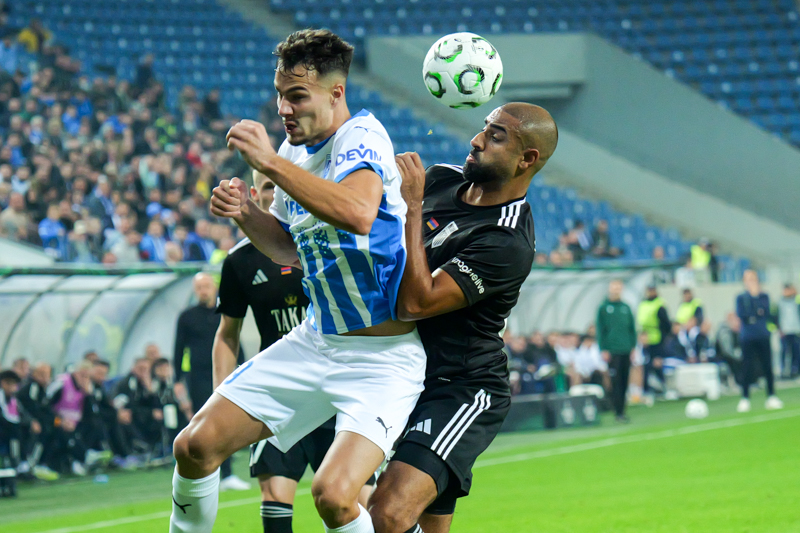
Set your aperture to f/2.8 or f/4. We want the player to “jump out” of the picture. A wide aperture creates that creamy blur behind (the bokeh we all talk about over a beer) and forces the viewer to look exactly where they should: at the grit on the athlete’s face. Plus, let’s be honest, it makes the shot look “pro” instantly.
ISO is your friend (even if it’s a bit noisy)
Many beginners fear high ISO as if it were the bogeyman. Don’t be scared of ISO 3200 or even 6400 if it’s evening or you’re in a hall where the light is more of a suggestion than a reality.
Modern sensors can take a lot. Better a bright shot with a bit of grain than a dark one where you can’t tell who scored. Give it some character — it’s not a wedding or a christening where everything has to be smooth as silk!
Autofocus: stick to them like a stamp on a letter
You can’t use single-shot focus (AF-S) for sport. By the time it locks focus, the striker is already in the dressing room having a shower.
Always use AF-C (or AI Servo on Canon). It’s like having a hunting dog that won’t let go of its prey: the camera “tracks” the subject as it runs.
A veteran’s tip: Learn to shoot with both eyes open. One looks through the viewfinder, the other sees the play coming in from the side (peripheral vision). Sounds a bit unhinged? Maybe, but it’s the only way not to be caught out by a lightning counter-attack.

Anticipation: chess on the sideline
The biggest mistake I see in young photographers is chasing the ball with the lens. Do that and you’ll always be a second behind.
Sports photography is about anticipation. You have to know the game.
- If it’s football and you see the left winger break down the flank, don’t watch him — focus on the penalty area where the cross will land.
- If it’s basketball, don’t watch the player dribbling at half court — wait for him under the basket.
You have to “read” the play before it happens. It’s like chess: whoever thinks three moves ahead gets the cover shot.
Positioning: if your knees hurt, you’re doing a good job
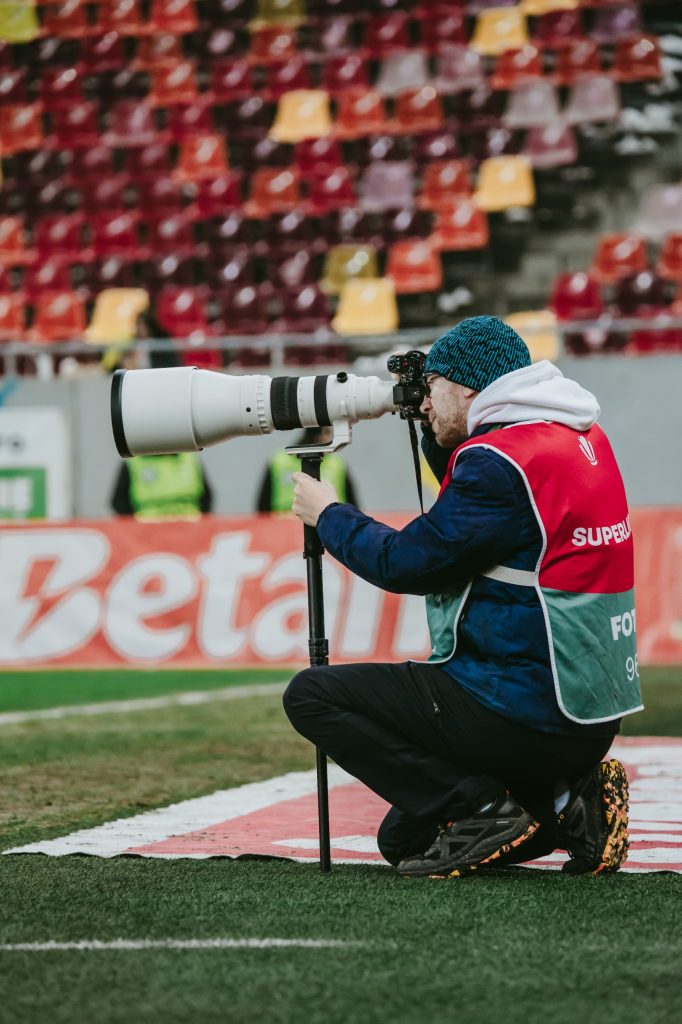
A lazy photographer stands. A good photographer kneels. A great photographer lies on his stomach. Why? Because a low perspective adds grandeur. Players look huge, jumps look superhuman, and the background is cleared of the clutter on the grass.
If you come back from a match with clean knees on your trousers, you’ve missed the best angles. Simple.
Don’t just photograph the ball — look for the drama!
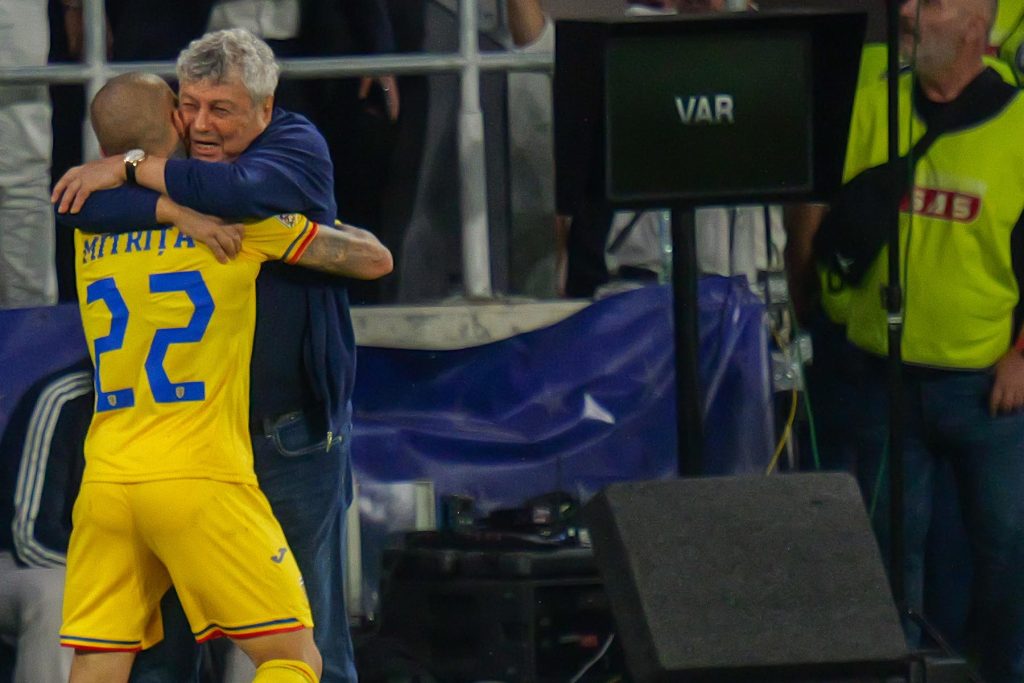
A match isn’t only chances on goal. The best frames I’ve taken in 20 years weren’t necessarily the shots, but:
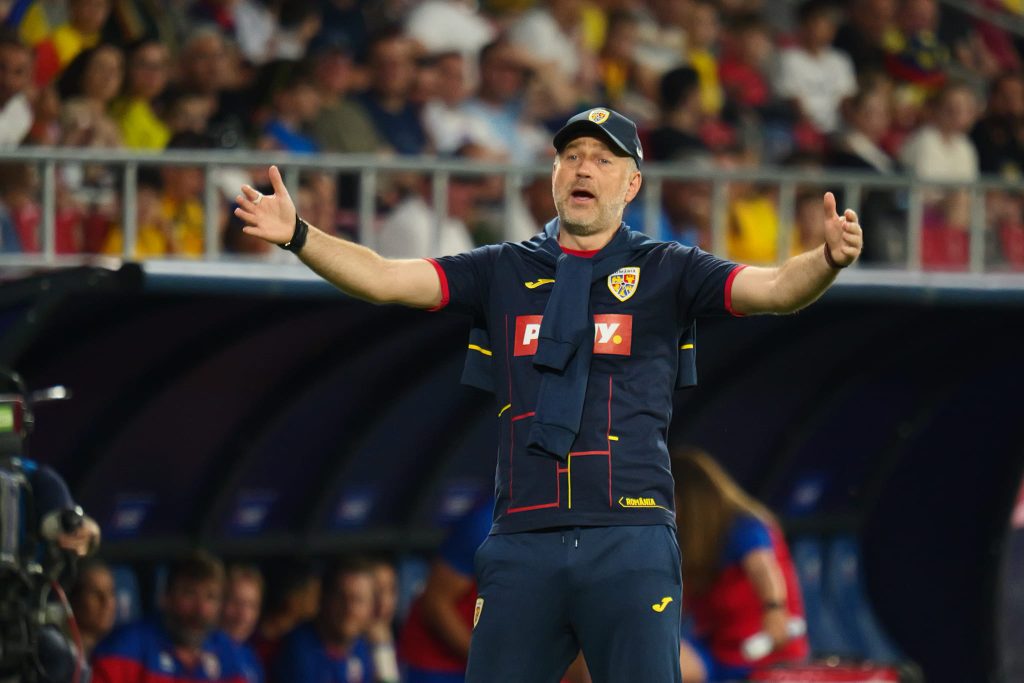
- The clenched fist of the coach yelling on the touchline as if he were in Braveheart.
- That “all my ships have sunk” look on the keeper’s face after letting one in through his legs.
- That wild, collective joy after the final whistle, with tears of happiness and exhaustion.
Sport is 50% physical effort and 50% psychology. If you want to go from “the guy with the camera” to “photographer”, hunt the emotion, not just the round object flying through the air.
Key takeaways
Key takeaways:
List:
- a fast shutter speed is essential
- a wide aperture helps separate the subject
- high ISO is not the enemy
- continuous autofocus is a must
- anticipation makes the difference
- emotion tells the story
Want to learn photography more clearly?
Explore the free courses on AF-C.RO and start with photography basics, camera settings and composition.
Leave a Reply