
Focus On Perfection
Exposure — how to learn to “see” like a camera 1 Section8 Lessons1 Quiz10 Weeks
🔺 Lesson 2: The exposure triangle — the three magicians of light
Photography has three “magic dials”:
👉 Aperture
👉 Shutter speed
👉 ISO
Together they form what photographers call the “Exposure triangle”.
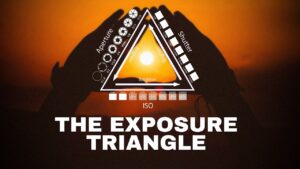
Understanding it is like finding out how your camera thinks.
🔹 Aperture — The camera’s pupil
The aperture is like the camera’s eye.
It opens and closes, letting more or less light in.
-
f/2.8 → wide open, lots of light, blurred background
-
f/16 → narrow, little light, everything sharp
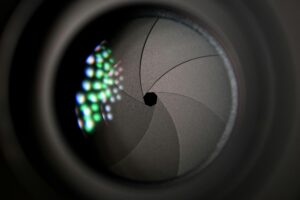
💡 Picture it like this:
It’s like when your pupil shrinks in the sun or widens in the dark.
The camera does exactly the same — except you decide how “big” the pupil is.
🔹 Shutter speed — The camera’s blink
Shutter speed (or exposure time) is how fast the shutter “blinks”.
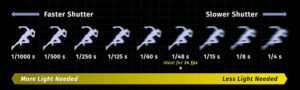
The faster it blinks, the less light it catches, but it freezes motion.
The slower it blinks, the more light it lets in, but it can make the image shaky.
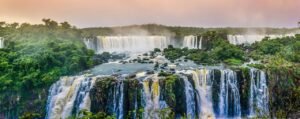
🔸 1/1000s → ideal for sports, freezes the action
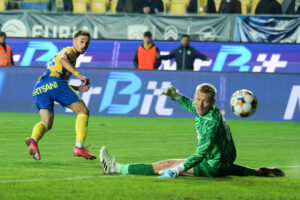
🔸 1/30s → good for calm landscapes, but watch out for camera shake
🎯 Picture this:
You’re photographing a child jumping into a puddle.
If the shutter speed is too slow → the water becomes an artistic blur.
If it’s fast → you catch every drop in the air.
🔹 ISO — The light amplifier
ISO is like a pair of night-vision goggles.
The higher you raise the ISO, the better the camera “sees” in the dark.
But at a price: the image becomes “noisier” (that grain appears, called noise).
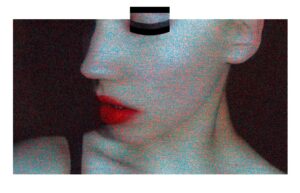
🔸 ISO 100 → clean, but only in strong light
🔸 ISO 3200 – 12000→ perfect for night, but with grain
💬 Example:
It’s like the volume on an old radio — if you turn it up too loud, you also hear the background noise.