
Focus On Perfection
Chess Photography – The Art of Capturing a War in Silence 4 Sections162 Lessons5 Quizzes10 Weeks
LESSON 2.4 • 8. Autofocus – What do you select before photographing a chess player?
We discussed AF-S and AF-C in the previous lesson.
Now we’ll go further. I want you to understand how we choose the focus area and how we stop the camera from tracking the wrong person.
Imagine you’re photographing a grandmaster. In front of him are a few chess pieces. Behind him is his opponent. A few metres away there’s an arbiter.
The camera detects three faces.
You want the face of the player in the foreground. The camera decides to focus on the arbiter. Maybe because his tie is more interesting. We don’t know.
But the photo is ruined.
A. Eye AF – Very useful, but not infallible
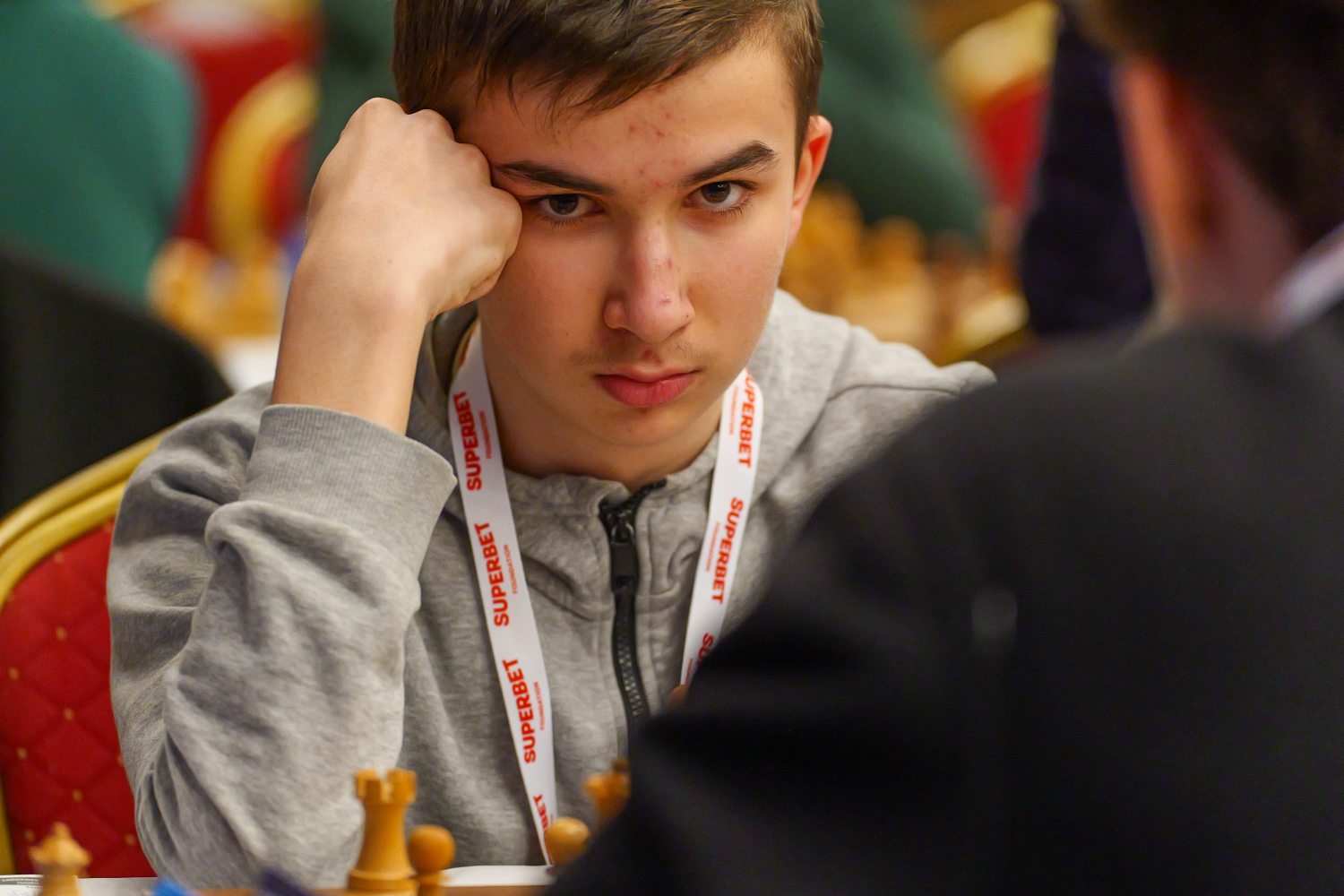
Automatic eye focus can be excellent for chess photography.
But the system has to detect and track the right person.
If there are several faces in the frame, select the subject you want using the options available on your camera.
If eye detection is unstable, use a smaller AF area.
Don’t miss the moment just because the camera is trying to identify everyone in the room.
B. AF-C – For changes of position
I recommend testing it for portraits and gestures.
The player leans forward, raises his forehead, looks at his opponent or sits back in his chair. AF-C can update the focus throughout these changes. But that doesn’t mean it will always be better than AF-S. Some cameras and lenses may respond better in one mode than in the other.
The practical test is what decides.
C. AF area – How much do we let the camera search?
 Small AF point
Good when you want to focus precisely on the eye or a detail, and automatic recognition isn’t working properly.
 Medium AF area
Useful when the hand or face moves a little and you want more tolerance in tracking.
 Wide / automatic AF area
It can be good in certain dynamic moments, but there’s a risk the camera will select another player or a piece.
D. Focusing with the AF-ON button
Many professional photographers prefer Back Button Focus.
In this setup, focusing is activated by a button on the back of the camera, usually AF-ON, separate from the shutter button.
The advantage is that you can control separately when you focus and when you take the photo.
For example, you track a player with AF-ON, then release the shutter when the expression you want appears.
You don’t have to use this method.
If you’re a beginner and you get on very well with half-press focusing, you don’t need to change everything in a single day. But it’s worth trying it to see which method suits you.
Note: If you choose Back Button Focus, check that you’ve deliberately disabled focusing on the shutter button. Otherwise, the two controls may overlap in a way you don’t want.